Do not start too early, and do not start on a cold windowsill
Starting tomatoes by seed is a measured project, not a late-winter hobby that has to begin the day the catalogs arrive. Plants started too soon become large, hungry, and hard to keep sturdy indoors, and they do not automatically give you an earlier or better crop. University of Minnesota Extension’s guide to growing tomatoes in home gardens puts the indoor start at five to six weeks before planting out, and notes that earlier plants are harder to manage without a clear gain. In a Minnesota calendar that indoor start often falls in mid-April; your date should come from your own last-frost information and your local Cooperative Extension service, not from someone else’s latitude.
The same official advice, and UMN’s broader page on starting seeds indoors, will keep you from wasting mix and heat. Use a sterile, soilless germination mix, give seeds warmth to sprout, then give seedlings bright light from above. A windowsill that is cold at night and hot at midday is a classic way to get tall, leaning stems.
Count the plants you have room to grow, and the space they will take in the garden. Indeterminate, vining tomatoes need more room and a support; determinate, bush types stay shorter and ripen a crop in a shorter window, which is useful if you want a canning batch or you are growing in a tight space or a container. Buy seed you will use in a couple of years, and store what is left cool and dry.
A week-by-week table you can resize to your frost date
The calendar below is a sequence, not a climate. Set “week 0” as your intended transplant date, which should be after frost danger has passed and the soil has warmed.
| When | What you do | What it should cost you in time and supplies | A false economy |
|---|---|---|---|
| About 6 weeks before transplant (or 5, if that matches your official local guidance) | Sow ¼ inch deep in a seed-starting mix, in cells or small pots with drainage, and label the variety | A small amount of mix, a few cells, and warmth. UMN suggests keeping the mix around 75–85°F until seedlings emerge if you can | Sowing a whole packet “for luck” |
| After emergence | Move to bright overhead light; a slightly cooler, still-warm mix is fine; water so the mix is moist, not swampy | Electricity for lights, and a daily look | Leaving them in a dim window and then buying replacements when they stretch |
| After true leaves appear | Thin or pot on so seedlings are not crowding; UMN mentions spacing of about two inches at this stage in a flat, or use individual cells | A little more mix and a few minutes | Tugging a clump apart later, when the roots are knitted |
| While they grow on | Keep the light close, turn trays if needed, and do not drown or dry them in turns | Attention, which is the real cost | A high-nitrogen feed that makes a lush, weak plant if you have not yet needed fertilizer at all |
| 1–2 weeks before planting out | Harden off: short, shaded outdoor periods first, then more sun and time, and back indoors if a freeze threatens | A tray you can carry, and a forecast | Setting tender plants out all day on the first warm afternoon |
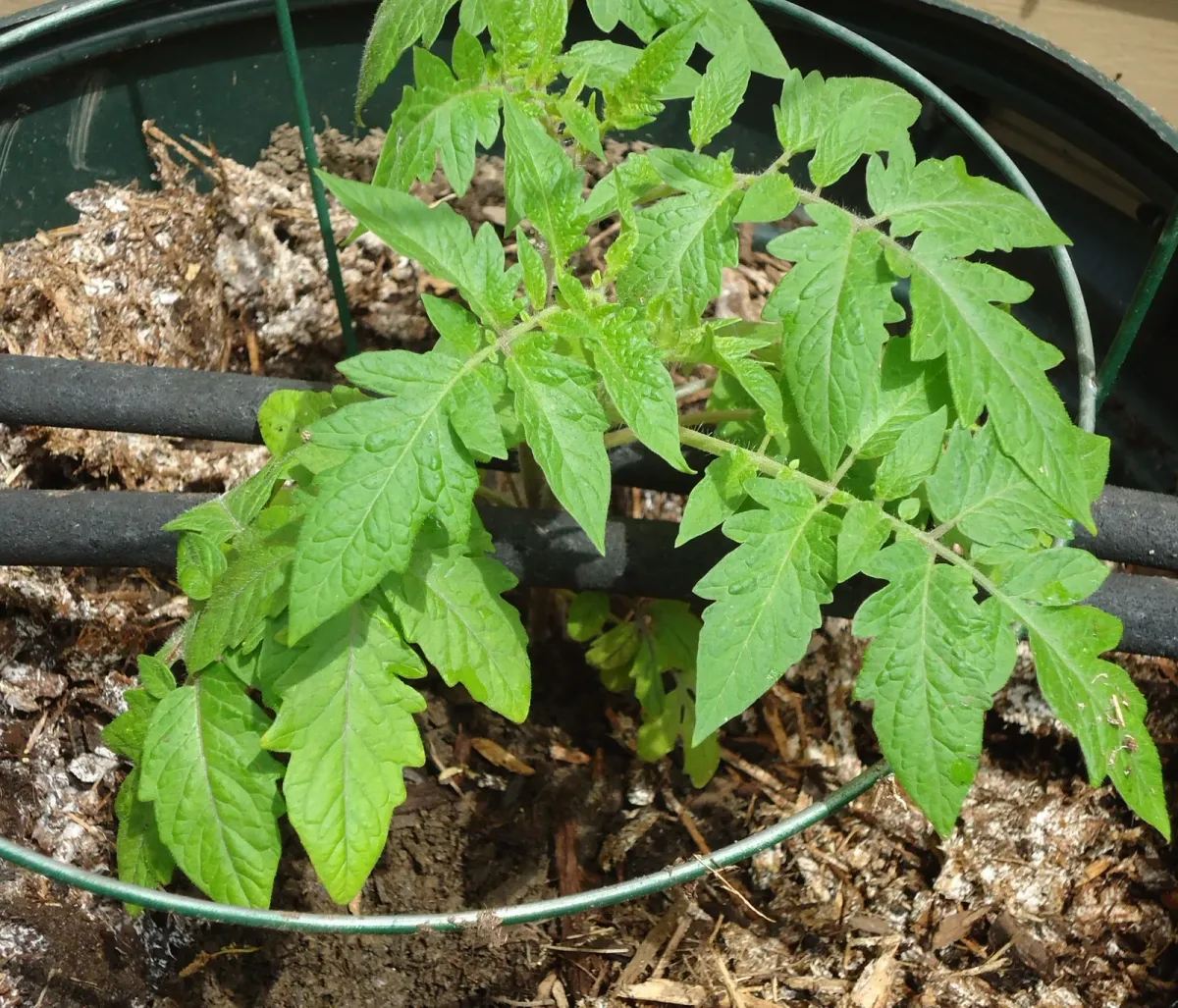
| Transplant day | Wait for a cloudy spell or late afternoon if you can; water first; set the plant a little deeper, because tomato stems will root along a buried section; put the cage or stake in now | The support you were going to buy later anyway | Leaving a peat-pot rim above the soil, where it can wick the root ball dry, which Extension specifically warns against |
If you use a heat mat to hit that germination warmth, check moisture more often. The mat dries the mix faster. After emergence you do not need to keep the tray in that hotter band.
Light, water, and the stem you actually want
Overhead light, close to the leaves, is the difference between a stocky seedling and a pale one you will nurse for weeks. If the stems lean, the light is too weak, too far, or only at one side. Raise the plants or lower the lamps as they grow, rather than hoping a sunny weekend will correct a lean.
Water thoroughly when you water, then let the mix just need it again. Inconsistent moisture is easier to get right in a small cell you can lift and feel than in a deep, forgotten tub. When plants are grown on and nearing their move outside, official tomato guidance includes easing back a little on water as part of getting them ready; do not combine that with a sudden blast of full sun.
Do not use a fertilizer that contains a weed killer on food plants, ever. For ordinary feeding, follow a soil test and a local recommendation once the plants are in the garden. Too much nitrogen, as UMN notes, can give you a leafy bush that is slow to fruit. That is a poor return on a bottle of feed you bought to “help.”
Choose disease-resistant varieties if you already know a problem in your garden, using the resistance codes on a reputable seed list. That choice is cheaper than a miracle spray after the fact.
A checklist for a small, successful batch
- The sow date is 5–6 weeks before a realistic, frost-free transplant date for my area
- I am starting only as many plants as I have light, space, and garden room for
- The mix is soilless and the cells drain
- Warmth is available for germination, and close overhead light is available after
- Varieties are labelled, and I know which are bush types and which need cages
- A hardening-off week is in the calendar
- Supports will go in at planting, and no peat-pot rim will stick up out of the soil
Questions that come up when the first official seed packet is in hand
Can I start tomatoes eight or ten weeks early, just to be safe?
You can, and you will then have large plants to pot on, to stake in the house, and to keep watered. Official tomato guidance does not treat that extra time as a reliable way to get a better harvest. A sturdy five- or six-week plant, hardened off, is the cheaper aim.
Why are my seedlings tall and thin already?
Usually, light. Move the lamp closer, or add real growing light, and do not keep them on a swinging windowsill. Warm, dim conditions grow stems. If they are already very stretched, you can pot them deeper, because tomato stems will root, but fix the light or the next internodes will be just as weak.
Should I buy plants instead?
If you need two or three plants and have no lights, buying sturdy, unmarked, compact starts can be the more economical choice. If you want unusual varieties, or many plants, seed is still good value — if you count time and electricity honestly.
When do I move them into the garden?
After frost danger has passed and the soil has warmed, on a mild, preferably cloudy time of day, after hardening off. Warm-season crops do not forgive a heroic early planting as often as we hope they will. Check a local frost guide, not a feeling in late afternoon.